
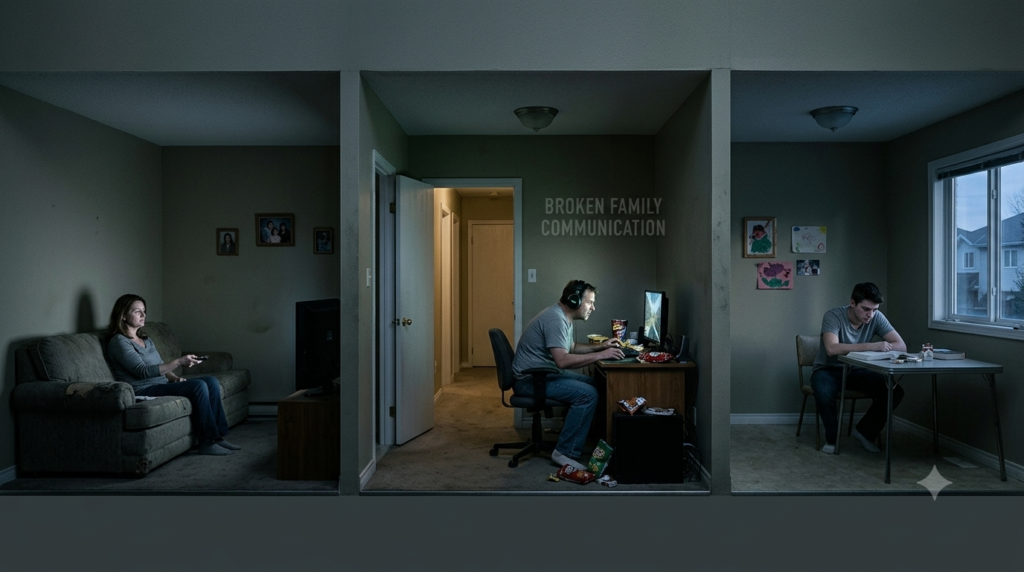
Behind the counter of my convenience store, I don’t just see the products people buy; I see the visible weight of the lives they carry. Yesterday, a young man walked through my doors who completely broke my heart. I hadn’t seen him in three months. Before he disappeared, he was a handsome, bright high school graduate who had just proudly started a new job at Tim Hortons.
When he stood before me yesterday, he was completely unrecognizable. He had lost an alarming amount of weight, and his face was etched with deep, visible emotional stress. When I gently asked where he had been for so long, his response shook me to my core. “I just got out of jail,” he whispered. “I was charged with assault. My parents were fighting, and I accidentally hit my mom trying to stop it.”
A Note from Angie: I am a convenience store owner and a passionate wellness researcher—not a mental health professional or counselor. The observations shared here are from real-world human interactions meant to inspire us to build healthier homes. Always seek professional family counseling for serious crises.
The Prison of a Silent Home
As he spoke, he grabbed two packs of beer. He tried to mask his anxiety by asking if I needed to see his ID, claiming he was 21. But his mind was entirely detached from reality. He turned around and completely walked toward the exit door without paying. Trusting my instincts, I quickly engaged the security lock and firmly said loudly, “You haven’t paid me.”
He startled, fabricating a quick lie about needing to grab cash from his car outside, claiming he wasn’t trying to steal. I knew he was lying. His physical actions showed an absolute intent to walk away without paying. But looking at his hollow eyes, I chose peace over conflict. I didn’t argue with him. I simply said, “It’s okay. I believe you have money with you.” He quietly put the beer down and left the store.
Later that night, I thought deeply about his history. His father struggled heavily with alcohol and substance abuse for years. For 12 long years, his parents lived under the same roof but never spoke a single word to one another. The father hid in one room playing video games, the mother watched TV in another room, and this boy sat completely isolated in his bedroom. It was a home built entirely on broken family communication.
Children Mirror Their Parents’ Behavior
This tragedy highlights why positive communication and emotional security are so essential. Children are literal mirrors; they copy their parents’ behaviors. When a child grows up witnessing constant silent hostility, fighting, and a total lack of emotional expression, they lack the tools to regulate their own stress when they grow up.
In a moment of high-tension family chaos, this boy reacted with the only coping mechanism he was ever exposed to: aggression. He didn’t know how to control himself, and he paid a devastating price by assaulting his own mother. Now, his father has walked out, the home is completely divided, and this young man is left forcing himself to survive entirely alone. It terrified me to see that desperation drive him to try and steal from me—someone who has known him since he was young.
Stopping the Cycle of Silent Neglect
A truly healthy family isn’t one that never faces problems; it is one where members actively talk, acknowledge each other’s feelings, and solve crises together. We must work to stop domestic violence and emotional neglect at the root. If we want to protect our youth, we must understand that the way we handle conflict shapes the survival of our children.
Managing personal pressure is a massive challenge for many families today, and finding ways to reduce mental burdens is essential for everyone. (Note: Highlight this sentence and add a link to your previous article about managing stress or wellness here to fix your internal link error!) We must learn to speak to each other with love, break the silence, and heal our homes before the damage reaches the next generation.
Discover how another neighborhood regular broke a painful family cycle through pure love and community dedication.