
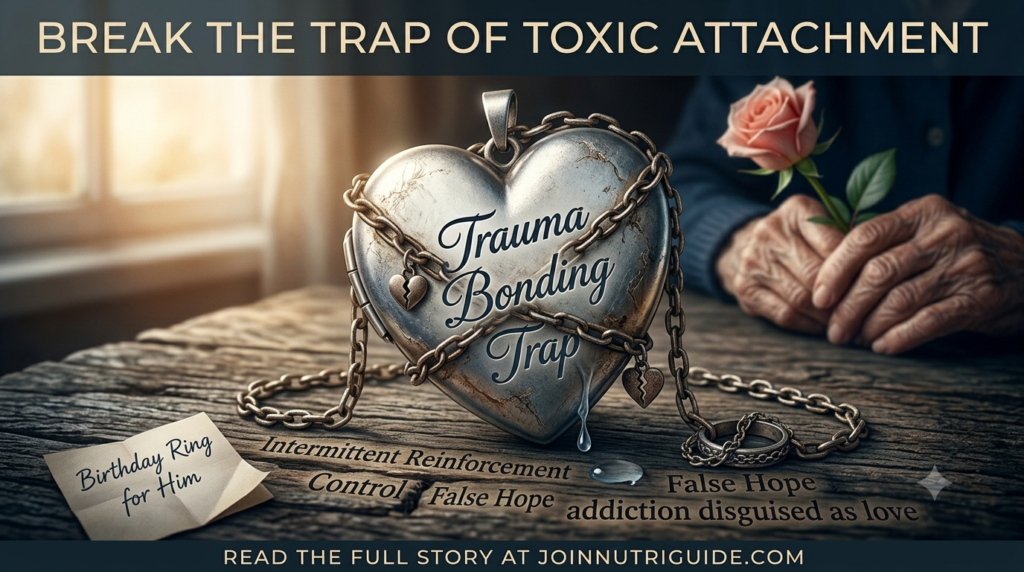
We see hundreds of faces pass through our lives every week, but some leave an indelible mark on our hearts. For years, a regular customer would walk into my life with a beautiful, calm smile. She was friendly, gentle, and always had a kind word. But over the last few months, that beautiful smile faded, replaced by a devastating descent into heartbreak, confusion, and ultimately, tragedy.
She had been chased away by her partner of over ten years. Homeless, unstable, and deeply wounded, she would stand before me and cry loudly, only to abruptly switch to defensive rationalizations. “He loves me,” she would whisper to herself. “I know he still loves me.” Even when he flaunted other women right in front of her, she refused to blame him. In her mind, it was always the fault of the other women. She even came in looking to buy a ring for his birthday, desperate to please a man who had already discarded her.
From the outside, it was clear he didn’t love her. But from the inside, she was trapped in a powerful psychological phenomenon known as trauma bonding.
What is a Trauma Bonding Dynamic?
To an outsider, it looks like madness or a lack of self-respect. We wonder, Why stay with someone who treats you like a pig? Why cry for someone who leaves you homeless? But a trauma bonding dynamic isn’t standard love; it is an addiction formed by cyclical emotional abuse, intermittent reinforcement, and deep-seated attachment. Over a decade of fighting back and forth without children, this relationship became her entire identity.
When a partner alternates between hostility and affection, it fractures the victim’s reality. She wasn’t lying about her love; she was desperately trying to hold onto a shifting illusion. She wasn’t fighting her partner; she was fighting reality to protect her hope that he would change.
Tragically, the emotional whiplash took a severe toll. In her final weeks, her emotions fractured. She would cry loudly, talk nonsense, laugh hysterically, and talk to herself. It looked like mental illness, but it was the agonizing sound of a human soul shattering under the weight of unrequited loyalty. Last week, I learned the devastating news: at just 50 years old, she succumbed to the darkness and overdosed, leaving behind a heartbroken 83-year-old mother who is now entirely alone.
Breaking Free From Toxic Trauma Bonding
What kind of love kills a person? The truth is, toxic attachment disguised as love is what destroys us. In today’s world, isolation and substance use make it even easier for people to slip into the dark. Society often looks away, assuming it’s not their business. But we must care. We must recognize when someone is drowning in a toxic cycle. Learn more about identifying domestic distress cycles on the HealthLine Relationship Guide.
If you are reading this and find yourself in a similar situation—if you are constantly making excuses for a partner who breaks your heart, isolates you, or abandons you—please wake up. This is not love. It is a trauma bonding trap that will slowly steal your joy, your sanity, and eventually, your life.
There is no light if you turn back to the person who broke you. The only way to rescue yourself is to choose a new path. For more support resources, check out our previous journal entries on healing in our Humanity Detective Diaries archive. It will be terrifyingly hard, and you may feel entirely lost at first, but moving forward is the only way toward a brighter, safer future. Choose to live. Choose to walk away before the darkness pulls you under completely.